The Chinese writing system holds a unique place among all scripts still in use today. Not only is it one of the oldest still in existence, it’s also the world’s only logographic system to have evolved to such complexity—and to remain in widespread use. Each character carries its own meaning, making Chinese uniquely dense and expressive. To aid learning, Taiwan developed its own phonetic system for Mandarin: Zhuyin, also known by its familiar symbols “ㄅㄆㄇㄈ” (Bopomofo). For many in Taiwan, these symbols are among the first they learn as children. Originally designed as a pronunciation aid, Zhuyin has over time become a symbol system unique to Taiwan.
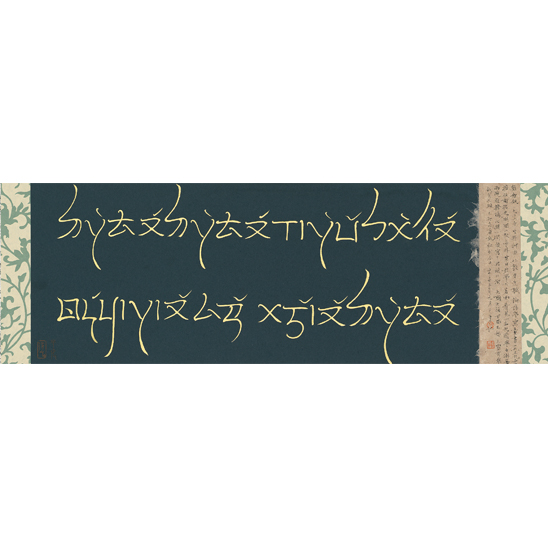
For Chang Tien-chine, Zhuyin carries a personal familiarity—once written by hand in childhood, now relegated to digital input methods, rarely seen on paper. In this work, he revisits that early connection by transcribing two well-known children’s songs, Lu La La and The Big Head Song, entirely in Zhuyin. Alongside the text, he includes the origins of the songs. By transforming the script, Chang seeks out a space between recognition and rediscovery, reawakening emotions tied to symbols that feel at once close and distant.
 Back to homepage
 Back
Back